The Kitchen Table Test: What a Festive Gathering Can Tell You About Your Hearing

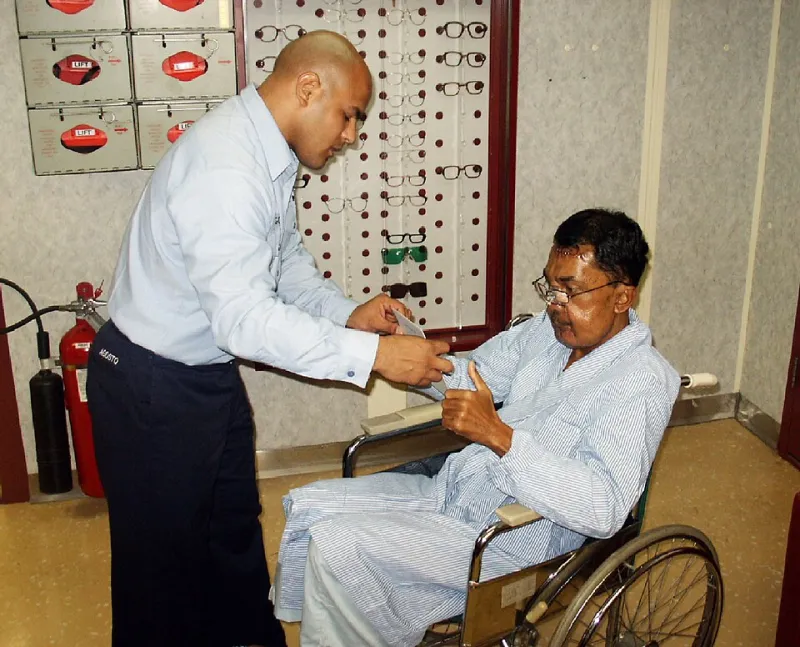
Photo: BambooGroveChronicles, CC BY-SA 4.0, via Wikimedia Commons
Most people expect Christmas to be loud. What is less expected is the moment, somewhere between the turkey and the washing-up, when a familiar voice seems to arrive slightly muffled — and you realise you have been nodding along without quite catching the words.
For many adults in the UK, a full room is the first honest test of hearing in a long time. It is not a cruel test, and it is not a diagnosis. It is simply a busy acoustic environment doing what quiet rooms cannot: showing where listening has started to take more effort than it used to.
Why a Crowded Room Is a Fair Test
A quiet living room flatters everyone. Conversation is close, there is little competing sound, and the brain fills in small gaps without complaint.
A Christmas kitchen removes those advantages all at once. Hard surfaces bounce sound around, the oven extractor and the dishwasher add a constant wash of noise, music plays from another room, and several conversations run at the same time. People speak across the table rather than towards it. Under those conditions, even mild hearing loss becomes noticeable — particularly the higher-pitched consonants that carry the difference between "fifteen" and "fifty", or between "pass the salt" and something altogether different.
If you found this year's gathering harder work than last year's, that is worth noting without alarm. It is information, not a verdict.
The Signs That Tend to Slip By
Hearing changes usually arrive gradually, which is precisely why they are easy to overlook. The following are common and worth a moment's thought:
- The television volume creeps up, and someone else comments on it before you do.
- You catch the beginning of a sentence but lose the end of it, especially when someone turns away.
- Group conversations become tiring rather than enjoyable, and you find yourself quieter by the end of the evening.
- Phone calls are harder than they used to be, and you avoid them where you can.
- You hear a ringing or buzzing in quiet moments, particularly at night.
- One ear seems less reliable than the other.
- Background noise — a pub, a café, a car — makes speech feel like it is arriving through a wall.
None of these confirm anything on their own. But if two or three feel familiar, a hearing check is a reasonable and ordinary next step, in the same way that a slightly elevated blood pressure reading is worth following up.
Small Adjustments That Help Tonight
You do not need to wait for an appointment to make festive conversation easier. A few practical changes can carry a surprising amount of the load.
Turn the music down or off during the meal. Background carols are pleasant and also competing. The difference between music at conversation volume and music at background volume is often the difference between catching a sentence and losing it.
Think about seating. Place the person who is struggling away from the kitchen doorway and the extractor fan, with their back to a wall rather than a window, and with light on the faces of the people opposite. Seeing a mouth move helps more than most people realise.
Get attention before speaking. A name, a light touch on the arm, or simply catching the eye first. Starting a sentence while someone is looking elsewhere means repeating it later.
Rephrase rather than repeat. If a sentence is not understood, saying the same words more loudly rarely helps. Saying it a different way usually does. "Shall I put the kettle on?" can become "Would you like a cup of tea?"
Do not shout from another room. Sound travelling through a doorway loses the consonants that carry meaning. Walk over, or send a text for anything important.
Use what is already there. Television subtitles, hearing loops in churches and halls, and a written note for the Christmas Day timings all reduce the strain.
Above all, do not say "never mind" when someone misses a remark. It closes the conversation more firmly than any hearing loss could.
What to Avoid
Cotton buds are not a cleaning tool and can push wax further in or irritate the ear canal. Ear drops from a pharmacy may help if wax is the issue, but they are not a universal fix. And quiet tests — whispering from across the room to see if someone hears — tend to create anxiety rather than useful information.
The NHS Route, Calmly Explained
In the UK, a hearing check is a routine piece of NHS care, not a specialist favour. The route differs slightly depending on where you live.
In many areas of England you can refer yourself directly to an NHS audiology service without seeing a GP first, though self-referral is not available everywhere. Your GP surgery website will usually say whether this applies locally. In Scotland, Wales and Northern Ireland, the GP is normally the first point of contact.
The appointment itself is straightforward. An audiologist will look in your ears to check for wax or infection, then ask you to listen to a series of tones through headphones and press a button when you hear them. It takes around twenty to thirty minutes, is not painful, and produces a clear picture of how well each ear hears across different pitches. Speech tests may follow.
If hearing aids are appropriate, they are available on the NHS at no cost, with follow-up support. Waiting times vary considerably by area, so it is worth asking at the point of referral what the current local wait looks like.
When Not to Wait
Most hearing changes can wait a few weeks for a routine appointment. Some cannot. Contact your GP urgently, or call NHS 111, if you experience:
- Sudden hearing loss, particularly in one ear, developing over hours or a few days
- Hearing loss alongside ear pain, discharge, or dizziness
- Tinnitus that appears suddenly in one ear, or pulsates in time with your heartbeat
Sudden hearing loss is treated as urgent because early assessment improves outcomes. Do not sit on it over the Christmas period.
Bringing It Up Kindly
If it is a relative rather than yourself, lead with the practical rather than the personal. "The music was too loud for everyone at that end of the table" is easier to hear than "you're going deaf". Offer to look up the local self-referral route together. Frame the appointment as a baseline — something to compare against in two years' time — rather than a problem to be solved.
Hearing is one of the few things that improves with attention and rarely improves with avoidance. A crowded kitchen in December is as good a reason as any to book a check in January.